Graphic encounters
Colonial prints and the inscription of Aboriginality
An Australia Research Council project led by Dr. Liz Conor and based in the Department of History and Archaeology here at La Trobe University.
About us
The Graphic Encounters Project is a research project funded by the Australian Research Council from 2016 – 2024 and auspiced by the History Program at La Trobe University. Its Chief Investigator is Associate Professor Liz Conor. This online catalogue of over 2,000 print images, and counting, is collating principally engravings, but also etchings, lithographs, aquatints and mezzotints in which Aboriginal Australians are featured.
The Graphic Encounters research project is creating an online or digital repository of prints featuring Aboriginal Australians to be launched on 31 March 2025. From collecting institutions all over the world and online databases we are drawing together this pre-photographic colonial visual library as a resource particularly for Indigenous researchers, artists, curators and scholars. We are committed to Indigenous data sovereignty and the integration of Indigenous values into data systems such as the Graphic Encounters digital repository.
From international and national archives, libraries, museums and galleries, large public and small private collections, the project has brought together dispersed and unknown prints depicting Aboriginal Australians to collate and investigate this overlooked pre-photographic visual archive of colonial prints. It interrogates the visual language of Aboriginality through the lens of Europeans and Settlers, casting new light on how this racialized category was construed and imagined in the medium that most coincided with colonial expansion, namely print media. It tracks how these perceptions shifted over time and place throughout the period of this medium’s predominance – from 1688 to 1900, from exploratory and settler incursion to Federation.
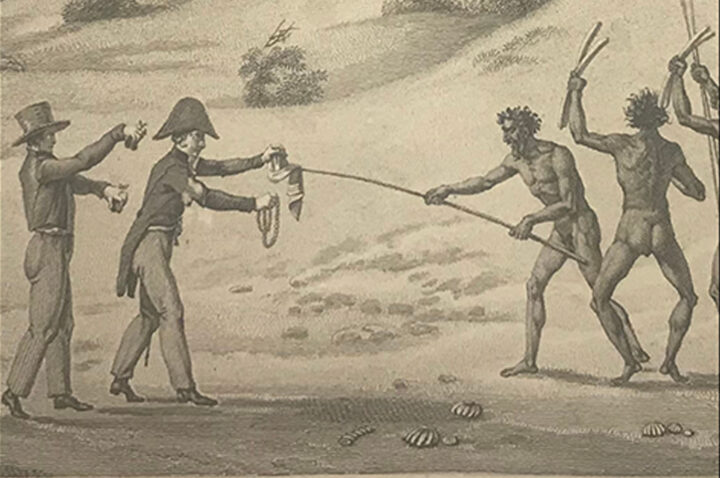
Prints were the principal means of reproducing images prior to the 1890’s, when the half-tone block enabled the reproduction of photographs in printed materials. The technology of printing coincided with colonial expansion and was its predominant form of visual expression. Prints disseminated imagery of Indigenous people determining how they were ‘put in the picture’ of settlement. Graphic Encounters asks how people’s place in this newly encroached territory was inscribed by colonial prints according to racial difference.
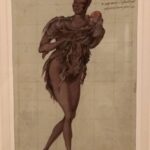
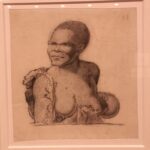
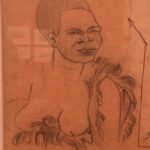
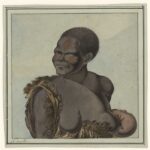
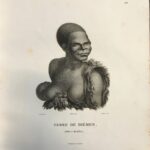
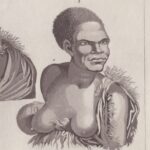
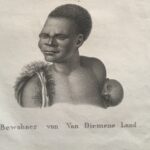
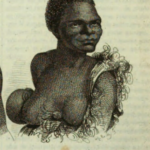
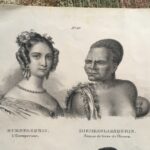
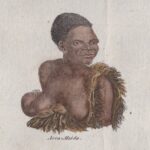
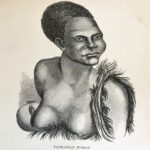
The series of images here show the Nuenonne woman Arra-Maida, encountered by the naturalist on the French Baudin voyage, Francois Peron, and illustrated by Nicolas Martin-Petit in 1802 and through the process below of full length watercolour to drawing to transposition, to watercolour portrait to engraving (1807 atlas) to aquatint to lithograph and beyond we see the many iterations and manipulations of this Palawa (Tasmanian) woman’s visage. Tracing the iterations of First Nation pictorial subjects is central to the Graphic Encounter’s research project.
Indigenous Data Sovereignty
The Graphic Encounters digital repository of prints of Aboriginal Australians recognise that communities depicted in the colonial print archive retain inherent cultural authority over their cultural heritage. Traditionally, First Nations peoples all over the world have been excluded from the protocols and processes of documentation, record keeping and display. The Graphic Encounters aims to use Indigenous governance frameworks in partnership and collaboration with Aboriginal communities, descendants and families in the cataloguing and online searchable database we will launch in late October 2024.
To meet these commitments and achieve these aims the Graphic Encounters digital repository is a registered research institution with the Local Contexts hub.
We are approaching stakeholding communities with engagement notice:
‘The Graphic Encounters digital repository is committed to the development of new modes of collaboration, engagement, and partnership with Indigenous peoples for the care and stewardship of past and future heritage collections.’
Through collaborative digitization and access, we will focus on the historical archiving of the colonial visual print library featuring Aboriginal Australians, developing curatorial protocols that are attentive to community cultural sensitivities regarding unique cultural materials along with digital access tools (online interfaces, catalogue records) that embed Indigenous cultural knowledge about and descriptions of the content of the prints we are drawing together from other collections.
The Local Contexts tools include TK (Traditional Knowledge) Labels by which Graphic Encounters hopes to provide information to assist users of traditional cultural knowledge from outside the depicted subjects’ communities to understand the importance and significance of this material, even when it is already in the public domain at multiple locations and online galleries.
Contact us
Associate Professor Liz Conor
ARC Future Fellow | Chief Investigator | Graphic Encounters
E: l.conor@latrobe.edu.au